
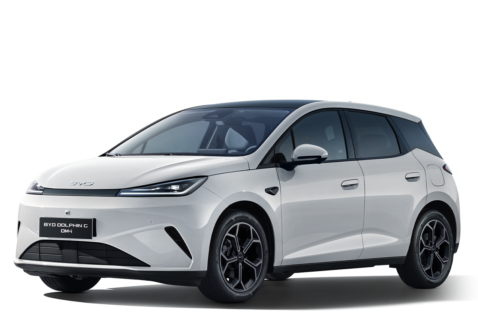
BYD DOLPHIN G DM-I Comfort plug-in hybrid FWD automatic
Sustainability rating
2026
88%
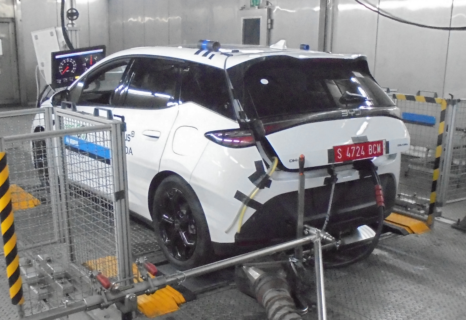
9.0
10
Clean Air
Exhaust emissions
good
9.5
10
good
9.410
| NMHC | NOX | NH3 | CO | PN | PM | Score | |
|---|---|---|---|---|---|---|---|
| Warm weather cold start | 9.810 | ||||||
| Warm weather warm start | 9.910 | ||||||
| Winter cold start | 9.010 |
| NMHC | NOX | NH3 | CO | PN | PM | Score | |
|---|---|---|---|---|---|---|---|
| Warm weather cold start | 10.010 | ||||||
| Warm weather warm start | 10.010 | ||||||
| Winter cold start | 10.010 | ||||||
| Battery drain test | 9.910 |
| NMHC | NOX | NH3 | CO | PN | PM | Score | |
|---|---|---|---|---|---|---|---|
| Warm weather cold start (legal test WLTP) | 7.18 | ||||||
| Warm weather warm start | 9.510 | ||||||
| Winter cold start | 5.410 | ||||||
| Winter warm start | 8.910 | ||||||
| Highway warm weather | 5.110 |
good
9.810
| NMHC | NOX | NH3 | CO | PN | PM | Score | |
|---|---|---|---|---|---|---|---|
| Real-world mixed drive | 9.710 | ||||||
| Short city trip | 9.910 |
| NMHC | NOX | NH3 | CO | PN | PM | Score | |
|---|---|---|---|---|---|---|---|
| Real-world mixed drive | 10.010 | ||||||
| Short city trip | 10.010 |
| NMHC | NOX | NH3 | CO | PN | PM | Score | |
|---|---|---|---|---|---|---|---|
| Real-world mixed drive | 8.610 | ||||||
| Short city trip | 9.410 | ||||||
| Congestion | 2.02 |
Non-exhaust emissions
adequate
7.6
10
adequate
5.16
| Result | Score | |
|---|---|---|
| Influence of mass | 2.13 | |
| Wheel alignment | 1.01 | |
| Accelerator response | 2.02 |
adequate
4.16
| Result | Score | |
|---|---|---|
| Brake dust mitigation | 0.04 | |
| Brake dust containment | 0.06 | |
| Recuperative braking - warm test | 4.16 |
Additional Life Cycle Assessment information
adequate
8.6
10
Pollutants
*Exhaust emissions are not contributing to the score in Additional Life Cycle Assessment information because they are scored in the Exhaust emissions section above.
8.3
10
Energy Efficiency
Energy demand
adequate
8.4
10
adequate
7.910
Warm weather cold start
1.0
l/100 km
14.2
kWh /100 km
Warm weather warm start
1.0
l/100 km
13.8
kWh /100 km
Winter cold start
1.9
l/100 km
24.1
kWh /100 km
Warm weather cold start
0.0
l/100 km
18.4
kWh /100 km
Warm weather warm start
0.0
l/100 km
17.8
kWh /100 km
Winter cold start
0.0
l/100 km
31.1
kWh /100 km
Battery drain test
0.8
l/100 km
15.0
kWh /100 km
Warm weather cold start (legal test WLTP)
4.5
l/100 km
0.0
kWh /100 km
Warm weather warm start
4.5
l/100 km
0.0
kWh /100 km
Winter cold start
8.2
l/100 km
0.0
kWh /100 km
Winter warm start
5.9
l/100 km
0.0
kWh /100 km
Highway warm weather
7.7
l/100 km
0.0
kWh /100 km
good
9.910
Total LCA energy consumption
*Direct propulsion energy share is not shown, it is included in ‘Fuel/energy supply’
Energy source share in total LCA consumption
Rolling resistance
adequate
6.5
10
9.3
10
Greenhouse Gases
Exhaust GHG emissions
adequate
7.9
10
In laboratory
Warm weather cold start
23.2
g CO₂-eq./km
Warm weather warm start
23.3
g CO₂-eq./km
Winter cold start
42.4
g CO₂-eq./km
Warm weather cold start
0.0
g CO₂-eq./km
Warm weather warm start
0.0
g CO₂-eq./km
Winter cold start
0.0
g CO₂-eq./km
Battery drain test
17.2
g CO₂-eq./km
Warm weather cold start (legal test WLTP)
102.1
g CO₂-eq./km
Warm weather warm start
102.5
g CO₂-eq./km
Winter cold start
187.0
g CO₂-eq./km
Winter warm start
135.0
g CO₂-eq./km
Highway warm weather
175.9
g CO₂-eq./km
Additional Life Cycle Assessment information
adequate
8.6
10
Total LCA GHG Emissions
*The scoring does not consider the direct exhaust GHG emissions at the tailpipe, because they are scored separately in ‘Exhaust GHG emissions’ above.
Vehicle Life Cycle Average Emissions 30 (+/-)
(Best 18 | Worst 63)
Specifications
- Vehicle class Small Family Car
- System power/torque 156 kW/210 Nm
- Engine size 1,498 cc
- Declared consumption Fuel 1.4 l/100 km Electric 11.1 kWh/100 km
- Declared CO2 32 g/km
- Declared battery capacity Usable (net) 18.3 kWh Installed (gross) 18.3 kWh
- Mass 1,575 kg
- Heating concept High voltage heater
- Tyres 215/50R18 96V
- Emissions class Euro 6 EB
- Tested car LC0C74C46T409XXXX
- Publication date 11 2026
Show less
Show more
Driving Experience
Consumption & Range
good
Estimated actual consumption
What consumption can be expected in real world conditions?
good
| Conditions | Urban | Rural | Highway | Mixed | |
|---|---|---|---|---|---|
| Warm weather - empty battery |
4.0
|
4.6
|
5.9
|
5.6
|
l/100 km
|
| Cold winter cold start - empty battery |
9.1
|
7.5
|
6.7
|
8.4
|
l/100 km
|
| Warm weather - charged battery |
18.5
|
18.7
|
22.6
|
19.6
|
kWh/100 km
|
| Cold winter cold start - charged battery |
36.2
|
26.7
|
30.2
|
31.1
|
kWh/100 km
|
| Warm weather combined mode |
2.0
l /100 km
|
+ |
12.7
kWh /100 km
|
The combined mode estimations assume 65% electric driving, whereby the ratio is derived from the 2025 Utility Factor concept in WLTP regulation.
Driving range
What driving range can be expected in real world conditions?
good
| Fully charged | Pure electric range | |
|---|---|---|
| Warm weather | 97.0 |
km
|
| Cold winter | > 23 |
km
|
The vehicle was able to perform the entire Cold Winter cold start test in pure electric mode.
Accuracy of display
Is the consumption figure on the display correct?
good
| Electricity use | |
| Fuel use |
Cold Winter Performance
good
Cabin heating
Does the vehicle get warm quickly in winter?
good
| Type | Front | Rear |
|---|---|---|
| Head area |
226s
|
400s
|
| Footwell |
380s
|
The rear footwell area did not reach the target temperature of 16°C during the test.
Additional heating functions
What functions can be used to improve heating comfort?
| Y/N | Fitment | |
|---|---|---|
| Heat pump | ||
| Seat heating front | Standard for the tested version | |
| Seat heating rear | ||
| Steering wheel heating | Standard for the tested version | |
| Scheduled pre-heating of seats | Standard for the tested version | |
| Scheduled steering wheel pre-heating | Standard for the tested version | |
| Scheduled cabin air pre-heating | Standard | |
| Smart cabin heating management |
Cabin thermal insulation
How well does the cabin maintain its temperature?
good
Good
Adequate
Poor
Charging Capability
not applicable
Green NCAP comments
Plug-In hybrids are subject to evaluation in two Driving Experience categories – Consumption and Range, and Cold Winter Performance. While good fuel and/or energy consumption properties are to be expected from a vehicle of its size, the DOLPHIN G also surprises with good performance in the cold weather assessment.
Plug-In hybrids are subject to evaluation in two Driving Experience categories – Consumption and Range, and Cold Winter Performance. While good fuel and/or energy consumption properties are to be expected from a vehicle of its size, the DOLPHIN G also surprises with good performance in the cold weather assessment.
- Green NCAP's real world consumption estimations are based on measured results corrected with factors addressing real-world behaviour. The DOLPHIN G's results are between ‘adequate' and ‘good', depending on the scenario – empty or charged battery, and warm or cold weather. It is not just the high pure electric range of 97 km which contributes to a good evaluation, but also the fact that the entire ‑7°C Cold Test could be driven in pure electric mode, indicating a range of at least 23 km (WLTC test distance). The board computer readings are mostly accurate but showed a high deviation from the measured figures in the ‑7°C Cold Winter test in electric mode.
- The DOLPHIN G uses a high voltage heater for heating the cabin. The vehicle surprised with a quick cabin warm-up in most measured areas, but the rear footwell did not reach the target temperature of 16°C during the test, which might impact the comfort of the rear passengers. The tested BYD offers several functions as standard equipment to enhance heating comfort. In the insulation test, the cabin temperature dropped by only around 5°C after being left locked at ‑7°C for 30 min - a result which is rarely achieved.
Read more
Read less
Also covered by this rating
Variants
BYD DOLPHIN G
DM-I Sport plug-in hybrid FWD automaticBYD DOLPHIN G
DM-I Boost plug-in hybrid FWD automatic
Our verdict
The BYD DOLPHIN G DM-i is a compact plug-in hybrid hatchback with a declared pure electric driving range of 109 km. The value recorded in Green NCAP's more stringent test is 97 km, which still leads to a major contribution of the pure electric driving mode in the sustainability rating, and a relatively small contribution from the driving in combustion engine mode. The real-world environmental impact of the vehicle depends on the user's behaviour, driving conditions and recharging frequency. Green NCAP strongly recommends consumers to start their trips with a fully charged battery and to recharge frequently to maximise the benefit of the electric powertrain.