Our verdict

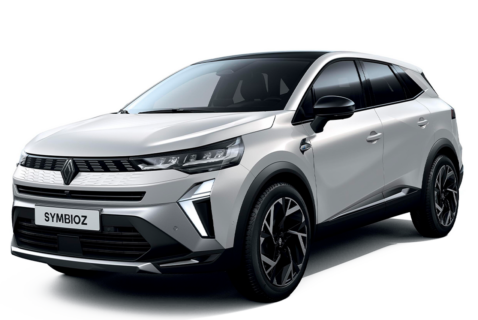
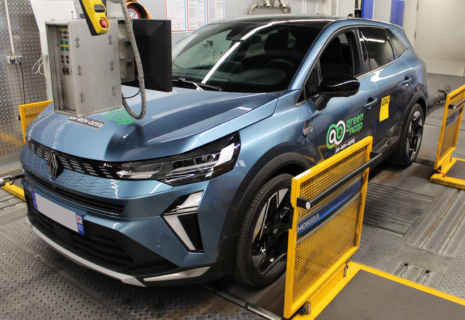
Tested here is the full hybrid Renault Symbioz. The car is positioned in the small SUV class and puts a modest 1,463 kg on the scale. Its operating strategy makes good use of the 230 V (nominal) electric system, resulting in creditable consumption values. The hybrid Symbioz surprises with a high rating score, achieved through robust emissions control, an efficient powertrain and reduced resources usage. The powertrain can be seen as an evolutionary improvement of the one used in the hybrid Dacia Bigster

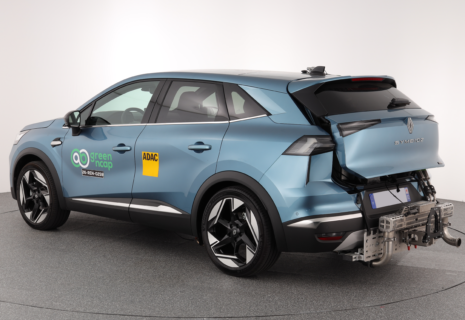
  • Reduces exhaust pollutants very effectively across all tests. Scores highly for tyre abrasion and uses hybridisation to cut brake wear through regenerative braking.
  • Delivers reasonable consumption values, ranging from a low 4.2 l/100 km in warm conditions to 7.4 l/100 km in the ‑7°C cold start test. Records 6.8/100 km in the Highway Test.
  • Benefits from low fuel consumption and European production but still emits considerable CO2 from fuel combustion. Reaches life cycle emissions of 210 g CO2 eq./km, including 127 g CO2 eq./km from the exhaust.
Read more Read less
7.5 10 Clean Air

The Symbioz's exhaust aftertreatment demonstrates high efficiency in reducing the exhaust pollutants. Emissions control is robust and ensures a very good performance across all tests, including ‑7°C cold winter testing, the high-power demand highway cycle and real-world on-road drive. The tyre abrasion score is high, reflecting little pollution, and the strong hybridisation allows significant energy recuperation and reduced reliance on the friction brake, although a pure electric vehicle performs much better in this aspect.

Exhaust emissions

adequate

8.5 10

good

8.210
NMHC NOX NH3 CO PN PM Score
Legal test (WLTP) 6.68
Warm weather 9.010
Highway 7.610
Winter cold start 8.110
Winter warm start 9.210

adequate

8.810
NMHC NOX NH3 CO PN PM Score
Real-world mixed drive 8.310
Short city trip 9.110
Congestion 2.02
  • good
  • adequate
  • marginal
  • weak
  • poor
  • n.a.
Non-exhaust emissions

adequate

6.6 10

adequate

4.86
Result Score
Influence of mass 2.33
Wheel alignment 0.51
Accelerator response 2.02

marginal

3.06
Result Score
Brake dust mitigation 0.04
Brake dust containment 0.06
Recuperative braking - warm test 3.06
  • good
  • adequate
  • marginal
  • weak
  • poor
  • n.a.
Additional Life Cycle Assessment information

marginal

5.5 10
Pollutants
*Exhaust emissions are not contributing to the score in Additional Life Cycle Assessment information because they are scored in the Exhaust emissions section above.
7.0 10 Energy Efficiency

The measured consumption results are only 4.2 l/100 km in the warm test and increase to 7.4 l/100 km in the ‑7°C Winter cold start test and to 6.8 l/100 km in the high speed and power demand Highway Test. It is worth mentioning that hybrids often lose the advantage of the hybrid system in cold weather cold start tests, as the engine needs to keep running to provide heat to the cabin and some components. The real-world mixed test was performed in rain at 18°C and recorded 5.7 l/100 km.

Energy demand

marginal

6.8 10

marginal

4.310
Legal test (WLTP)
4.5 l/100 km
Warm weather
4.2 l/100 km
Highway
6.8 l/100 km
Winter cold start
7.4 l/100 km
Winter warm start
5 l/100 km

good

10.010
Total LCA energy consumption
*Direct propulsion energy share is not shown, it is included in ‘Fuel/energy supply’
Energy source share in total LCA consumption
Rolling resistance

good

9.6 10
  • good
  • adequate
  • marginal
  • weak
  • poor
  • n.a.
4.7 10 Greenhouse Gases

The low fuel consumption values help the Symbioz score better in this part of the assessment than many other combustion engine cars, but burning fossil fuel nevertheless emits significant CO2 amounts, limiting the achievable score. In the full vehicle life cycle, a total of 210 g CO2‑eq./km are estimated, 127 g CO2‑eq./km of which are direct exhaust GHG emissions. The car is produced in Europe, which benefits the results.

Exhaust GHG emissions

weak

2.5 10
In laboratory
Legal test (WLTP)
101.1 g CO₂-eq./km
Warm weather
96.8 g CO₂-eq./km
Highway
155.7 g CO₂-eq./km
Winter cold start
167.8 g CO₂-eq./km
Winter warm start
114.8 g CO₂-eq./km
Additional Life Cycle Assessment information

good

9.0 10
Total LCA GHG Emissions
*The scoring does not consider the direct exhaust GHG emissions at the tailpipe, because they are scored separately in ‘Exhaust GHG emissions’ above.

Vehicle Life Cycle Average Emissions 50 (+/-)
(Best 41 | Worst 62)

  • good
  • adequate
  • marginal
  • weak
  • poor
  • n.a.

Specifications

  • Vehicle class Small SUV
  • Power/Torque 116 kW/265 Nm
  • Engine size 1,789 cc
  • Declared consumption 4.5 l/100 km
  • Declared CO2 101 g/km
  • Mass 1,463 kg
  • Heating concept Waste heat and low voltage heater
  • Tyres 225/45 R19
  • Emissions class Euro 6 EC
  • Tested car VF1RJB0087445XXXX
  • Publication date 09 2026
Show less
Show more

Driving Experience

Consumption & Range

good

Estimated actual consumption What consumption can be expected in real world conditions?

good

Conditions Urban Rural Highway Mixed
Warm weather
5.6
5.3
5.6
5.5
l/100 km
Cold winter
9.1
6.7
6.7
8.1
l/100 km
Accuracy of display Is the consumption figure on the display correct?

good

  • good
  • adequate
  • poor
  • n.a.
Cold Winter Performance

adequate

Cabin heating Does the vehicle get warm quickly in winter?

poor

Type Front Rear
Head area
505s
1,266s
Footwell
1,213s
The rear footwell area left reached the temperature in 1,177 seconds and in the right in 953 seconds.
  • good
  • adequate
  • poor
  • n.a.
Additional heating functions What functions can be used to improve heating comfort?
Y/N Fitment
Heat pump
Seat heating front Standard for the tested version
Seat heating rear
Steering wheel heating Standard for the tested version
Scheduled pre-heating of seats
Scheduled steering wheel pre-heating
Scheduled cabin air pre-heating
Smart cabin heating management
Cabin thermal insulation How well does the cabin maintain its temperature?

adequate

Good Adequate Poor
Charging Capability

not applicable

Green NCAP comments

Compared to conventional vehicles, which are only evaluated in the 'Consumption and Range' section, the Driving Experience assessment of full hybrid vehicles also includes the 'Cold Winter Performance' Category.

Read more

Also covered by this rating

Variants

Renault Symbioz

E-Tech Full Hybrid 160 Esprit Alpine petrol FWD automatic

Renault Symbioz

E-Tech Full Hybrid 160 Techno petrol FWD automatic