
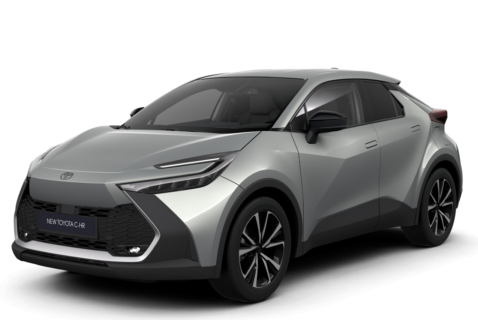
Toyota C-HR 2.0 Teamplayer plug-in hybrid FWD CVT
Sustainability rating
2026
70%
7.1
10
Clean Air
Exhaust emissions
adequate
7.6
10
adequate
7.110
| NMHC | NOX | NH3 | CO | PN | PM | Score | |
|---|---|---|---|---|---|---|---|
| Warm weather cold start | 8.510 | ||||||
| Warm weather warm start | 8.510 | ||||||
| Winter cold start | 4.510 |
| NMHC | NOX | NH3 | CO | PN | PM | Score | |
|---|---|---|---|---|---|---|---|
| Warm weather cold start | 10.010 | ||||||
| Warm weather warm start | 10.010 | ||||||
| Winter cold start | 4.610 | ||||||
| Battery drain test | 9.810 |
| NMHC | NOX | NH3 | CO | PN | PM | Score | |
|---|---|---|---|---|---|---|---|
| Warm weather cold start (legal test WLTP) | 5.68 | ||||||
| Warm weather warm start | 6.910 | ||||||
| Winter cold start | 4.410 | ||||||
| Winter warm start | 6.510 | ||||||
| Highway warm weather | 5.110 |
adequate
8.810
| NMHC | NOX | NH3 | CO | PN | PM | Score | |
|---|---|---|---|---|---|---|---|
| Real-world mixed drive | 7.810 | ||||||
| Short city trip | 9.610 |
| NMHC | NOX | NH3 | CO | PN | PM | Score | |
|---|---|---|---|---|---|---|---|
| Real-world mixed drive | 8.310 | ||||||
| Short city trip | 10.010 |
| NMHC | NOX | NH3 | CO | PN | PM | Score | |
|---|---|---|---|---|---|---|---|
| Real-world mixed drive | 7.410 | ||||||
| Short city trip | 9.110 | ||||||
| Congestion | 2.02 |
Non-exhaust emissions
marginal
5.7
10
marginal
2.96
| Result | Score | |
|---|---|---|
| Influence of mass | 1.93 | |
| Wheel alignment | 1.01 | |
| Accelerator response | 0.02 |
adequate
4.06
| Result | Score | |
|---|---|---|
| Brake dust mitigation | 0.04 | |
| Brake dust containment | 0.06 | |
| Recuperative braking - warm test | 4.06 |
Additional Life Cycle Assessment information
adequate
7.0
10
Pollutants
*Exhaust emissions are not contributing to the score in Additional Life Cycle Assessment information because they are scored in the Exhaust emissions section above.
7.4
10
Energy Efficiency
Energy demand
adequate
7.4
10
adequate
6.210
Warm weather cold start
2.4
l/100 km
9.0
kWh /100 km
Warm weather warm start
2.2
l/100 km
9.0
kWh /100 km
Winter cold start
4.7
l/100 km
10.5
kWh /100 km
Warm weather cold start
0.0
l/100 km
17.6
kWh /100 km
Warm weather warm start
0.0
l/100 km
17.5
kWh /100 km
Winter cold start
3.4
l/100 km
20.5
kWh /100 km
Battery drain test
0.4
l/100 km
17.0
kWh /100 km
Warm weather cold start (legal test WLTP)
4.9
l/100 km
0.0
kWh /100 km
Warm weather warm start
4.6
l/100 km
0.0
kWh /100 km
Winter cold start
6.2
l/100 km
0.0
kWh /100 km
Winter warm start
5.0
l/100 km
0.0
kWh /100 km
Highway warm weather
7.7
l/100 km
0.0
kWh /100 km
good
10.010
Total LCA energy consumption
*Direct propulsion energy share is not shown, it is included in ‘Fuel/energy supply’
Energy source share in total LCA consumption
Rolling resistance
adequate
7.1
10
6.7
10
Greenhouse Gases
Exhaust GHG emissions
marginal
5.4
10
In laboratory
Warm weather cold start
53.6
g CO₂-eq./km
Warm weather warm start
51.2
g CO₂-eq./km
Winter cold start
108.3
g CO₂-eq./km
Warm weather cold start
0.0
g CO₂-eq./km
Warm weather warm start
0.0
g CO₂-eq./km
Winter cold start
77.9
g CO₂-eq./km
Battery drain test
8.3
g CO₂-eq./km
Warm weather cold start (legal test WLTP)
110.1
g CO₂-eq./km
Warm weather warm start
105.3
g CO₂-eq./km
Winter cold start
140.4
g CO₂-eq./km
Winter warm start
114.1
g CO₂-eq./km
Highway warm weather
175.9
g CO₂-eq./km
Additional Life Cycle Assessment information
adequate
8.1
10
Total LCA GHG Emissions
*The scoring does not consider the direct exhaust GHG emissions at the tailpipe, because they are scored separately in ‘Exhaust GHG emissions’ above.
Vehicle Life Cycle Average Emissions 42 (+/-)
(Best 22 | Worst 66)
Specifications
- Vehicle class Small SUV
- System power/torque 164 kW/-
- Engine size 1,987 cc
- Declared consumption Fuel 0.8 l/100 km Electric 15.1 kWh/100 km
- Declared CO2 19 g/km
- Declared battery capacity Usable (net) 13.6 kWh Installed (gross) 13.6 kWh
- Mass 1,658 kg
- Heating concept Waste heat & heat pump
- Tyres 225/55 R18
- Emissions class Euro 6 EA
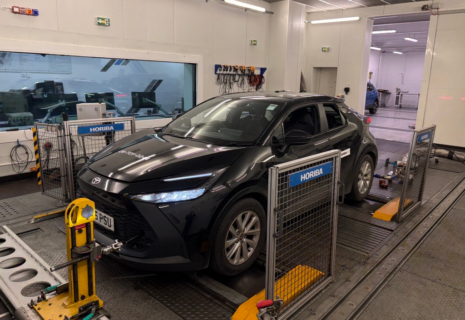
- Tested car JTPABACA80R02XXXX
- Publication date 11 2026
Show less
Show more
Driving Experience
Consumption & Range
good
Estimated actual consumption
What consumption can be expected in real world conditions?
good
| Conditions | Urban | Rural | Highway | Mixed | |
|---|---|---|---|---|---|
| Warm weather - empty battery |
3.9
|
5.3
|
5.8
|
4.7
|
l/100 km
|
| Cold winter cold start - empty battery |
5.6
|
6.1
|
6.6
|
5.6
|
l/100 km
|
| Warm weather - charged battery |
15.1
|
18.1
|
23.1
|
18.6
|
kWh/100 km
|
| Cold winter cold start - charged battery |
-
|
-
|
-
|
-
|
kWh/100 km
|
| Warm weather combined mode |
2.3
l /100 km
|
+ |
9.6
kWh /100 km
|
The vehicle could not perform the charged battery Cold Winter test in pure electric mode and relied heavily on the combustion engine.The combined mode estimations assume 51% electric driving, whereby the ratio is derived from the 2025 Utility Factor concept in WLTP regulation.
Driving range
What driving range can be expected in real world conditions?
adequate
| Fully charged | Pure electric range | |
|---|---|---|
| Warm weather | 65.0 |
km
|
| Cold winter | 0.1 |
km
|
No pure electric driving in the cold start Cold Winter test possible.
Accuracy of display
Is the consumption figure on the display correct?
good
| Electricity use | |
| Fuel use |
Cold Winter Performance
good
Cabin heating
Does the vehicle get warm quickly in winter?
good
| Type | Front | Rear |
|---|---|---|
| Head area |
280s
|
322s
|
| Footwell |
187s
|
The rear footwell area left reached the temperature in 251 seconds and in the right in 214 seconds.
Additional heating functions
What functions can be used to improve heating comfort?
| Y/N | Fitment | |
|---|---|---|
| Heat pump | Standard | |
| Seat heating front | Standard | |
| Seat heating rear | ||
| Steering wheel heating | Standard | |
| Scheduled pre-heating of seats | ||
| Scheduled steering wheel pre-heating | ||
| Scheduled cabin air pre-heating | Standard | |
| Smart cabin heating management | Standard |
Cabin thermal insulation
How well does the cabin maintain its temperature?
good
Good
Adequate
Poor
Charging Capability
not applicable
Green NCAP comments
Green NCAP's real world consumption estimations are based on measured results corrected with factors addressing real-world behaviour. The C-HR's results are ‘good' in the warm weather scenarios and in the empty-battery cold winter driving. However, as it was not possible to complete the Cold Winter test in electric mode, the mark received for this case is ‘poor', which consumers should bear in mind if their usage case includes frequent cold winter driving. The pure electric range of 65 km is sufficient for an ‘adequate' note, although the cold winter range gives a ‘poor'. Here, the combustion engine starts immediately, and the electric powertrain takes over just after sufficient temperatures have been reached in cabin and components. It is disappointing to see the combustion engine being activated to provide heat. The board computer readings are accurate.
- Green NCAP's real world consumption estimations are based on measured results corrected with factors addressing real-world behaviour. The C-HR's results are ‘good' in the warm weather scenarios and in the empty-battery cold winter driving. However, as it was not possible to complete the Cold Winter test in electric mode, the mark received for this case is ‘poor', which consumers should bear in mind if their usage case includes frequent cold winter driving. The pure electric range of 65 km is sufficient for an ‘adequate' note, although the cold winter range gives a ‘poor'. Here, the combustion engine starts immediately, and the electric powertrain takes over just after sufficient temperatures have been reached in cabin and components. It is disappointing to see the combustion engine being activated to provide heat. The board computer readings are accurate.
- The C-HR PHEV cabin heating performance with fully charged battery is impressive, as the vehicle heats up very quickly - also in the rear footwell. The car is equipped with a heat pump and utilizes a smart strategy to allocate heat only to occupied passenger seats. In the insulation test, the cabin temperature dropped by only around 4.4°C after being left locked at ‑7°C for 30 min - a remarkable result. This means that the heat is well maintained inside the car.
Read more
Read less
Also covered by this rating
Variants
Toyota C-HR
2.0 GR SPORT Premiere plug-in hybrid FWD CVTToyota C-HR
2.0 Team Deutschland plug-in hybrid FWD CVT
Our verdict
Toyota offers the famous C-HR as a plug-in hybrid, and the version tested here is the more powerful 164 kW variant. The car has an empty mass of 1,658 kg and a 13.6 kWh battery, which allows it to travel 66 km in pure electric mode (confirmed by Green NCAP measurements). The available electric range results in approximately equal shares of combustion and electric driving mode in the sustainability assessment, meaning that the benefits of the electric mode are limited. The real-world environmental impact of the vehicle depends on the user's behaviour, driving conditions and recharging frequency. Green NCAP strongly recommends consumers to start their trips with a fully charged battery and to recharge frequently.